
The businesses that last aren’t the loud ones. They’re the ones that understand the place, respect the people and let the community carry their story forward.
Richard O’Neill MBE
Creative Lead, Seven Stories
Extract from Shouty and Curious
When conversations turn to high streets, we often focus on buildings, investment and regeneration projects. Yet behind every successful place are people, relationships and a genuine understanding of what communities value.
Wendy Elliott, CEO of Seven Stories and Creative Lead Richard O’Neill MBE have long championed the power of listening and storytelling to help places connect with the people they serve.
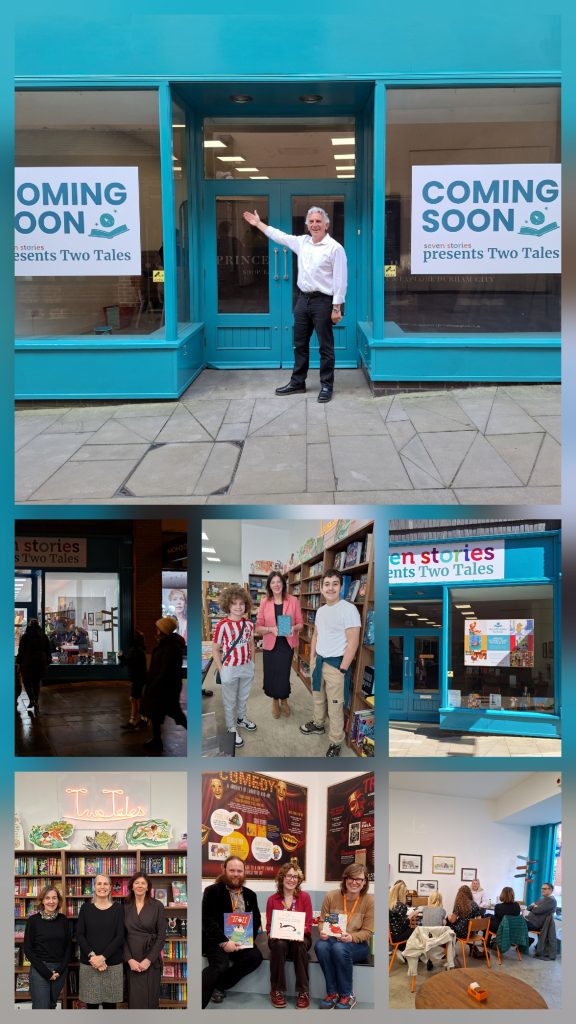
Their work through Two Tales offers a wonderful example of this in practice. Since opening just 14 months ago, the space has grown into far more than a visitor attraction. It has become a place for book launches, community events, late-night openings, reading groups, partnerships with Durham University and countless conversations that bring people together. The collage of photographs they shared captures how a place becomes part of a community, not overnight, but one relationship at a time.
This month brought further recognition for that approach, with the Two Tales team being shortlisted for the Visit Durham Superstar Award. To be recognised alongside some of County Durham’s longest-established visitor destinations is a fantastic achievement and demonstrates how authentic storytelling and genuine community engagement can help create places people want to visit, return to and recommend.
Richard has also shared a thoughtful story, Shouty and Curious, inspired by Seven Stories’ work in Durham and Newcastle. It explores an idea that reaches far beyond retail.
Whether we’re opening a shop, creating a visitor destination, planning a development or shaping a town centre strategy, the places that thrive are often those that listen first. As Richard’s story reminds us, lasting success rarely comes from making the loudest noise. It comes from understanding people, building trust and allowing communities to help shape the future of the places they call home.
Shouty and Curious
A story by Richard O’Neill MBE
The high street in the town had seen better days.
You could still feel the essence of what it used to be. The butcher who knew everyone’s name. The café that used to smell of home cooking. The charity shop where there was always a bargain to be had.
But the shine had faded.
People still walked the high street, because people always do, but the place needed a bit of care, a bit of listening and a lot of love.
Then Shouty arrived.
Shouty Ltd didn’t just open a shop; they landed.
Big vinyls slapped across the windows. Loud colours. Loud claims. Loud everything.
You couldn’t escape the announcements and advertising:
“We’re the best! The VERY best! This town has never seen anything like us!”
And at first, people went in.
Because when a place has been quiet for a while, noise is exciting.
Sales jumped.
Shouty strutted up and down their premises.
And when someone said, “This isn’t quite what you promised,” Shouty just turned the volume up.
“That’s just one opinion! We’re still the best!” they bragged, in complete denial.
Across the street, in a small unit that used to be a cobbler’s, Curious opened Curiosity & Co.
No shouting.
No fanfare.
Just a simple sign and a human welcome out on the street:
“We’re new. Come in, have a look. There’s no obligation to buy. We’d love to know what you think.”
Curious didn’t try to fix the high street with noise.
They started by listening.
Proper listening.
To the people who remembered what the place used to be.
To the ones who wanted it to feel like theirs again.
To the ones who didn’t want a miracle, just shops that cared enough to ask.
When someone offered feedback, Curious didn’t defend.
They adjusted.
They invited them back.
And slowly, those early customers became regulars, then champions, then storytellers.
They carried the story of Curiosity & Co in conversations at the school gate, in the queue at the post office, over a cuppa with a neighbour and across social media.
The high street began to change.
People realised Shouty’s noise wasn’t about their town at all.
It was about Shouty.
The promises didn’t match the reality.
The shouting felt tiring.
And when people wanted something honest, something rooted in the place they lived, they crossed the street.
Curious didn’t just build a business.
They created an opportunity for the high street to remember itself and its new purpose.
Other shops started listening too.
The florist asked what people wanted to see in the window.
The café brought back old favourites.
The butcher revived a recipe his grandad used to make.
Bit by bit, the high street began to feel like a place that belonged to the people again.
Not louder.
Just more alive.
Meanwhile, Shouty’s shouting lost its power.
The louder they went, the more people tuned out.
Even their loyal customers started asking:
“Why don’t they listen?”
One afternoon, Shouty walked into Curiosity & Co, now buzzing with life.
“How did you do it?” Shouty asked, quieter than ever.
Curious smiled.
“I listened to the place. I listened to the people. And I let them tell our story.”
And that was the turning point.
Shouty stopped shouting.
They started listening.
And the high street, like so many high streets across the country, began to flourish again.
Not because someone shouted it back to life, but because people were finally being heard.
Shouty learned that places don’t regenerate through noise.
They regenerate through listening.
People don’t want to be sold to.
They want to be seen and heard.
And on any high street, the businesses that last aren’t the loud ones.
They’re the ones that understand the place, respect the people and let the community carry their story forward.
About Richard O’Neill MBE
Richard is Creative Lead at Seven Stories and has worked across storytelling, visitor experiences and community engagement, helping organisations understand how places connect with the people who use them.
His work highlights the importance of listening, curiosity and collaboration in creating places that feel meaningful, welcoming and connected to their communities.


A great story and so true. In all high street businesses, the word has to be adapt to survive. A lot of fear in Indpenedent businesses in taking the risk to adapt, still a lot of ” we’ve always done it this way” attitudes.
In my local town we have 75% independents but they change hands frequently with no longevity.